Make a Hindi or Urdu Talking Avatar with Midjourney and D-ID

Turn a Midjourney portrait into a talking avatar in D-ID Studio. Use a short Hindi or Urdu script and preview the pronunciation, or upload your own recording for control over delivery.

Midjourney V8.2 is the current default. Midjourney’s web and Discord tools require a subscription, and D-ID Studio’s trial has plan limits and a watermark. Midjourney trial availability · D-ID Studio plans.

Create and animate the avatar

  1. Create a portrait with a clearly visible face. In Midjourney Create, use V8.2 to generate a front-facing, well-lit portrait. Choose a neutral expression with a closed, unobstructed mouth and save the image. A front-facing cartoon character with distinct lips generally gives you a better starting point for lip sync.

    Original friendly 3D cartoon presenter, front-facing head-and-shoulders portrait, neutral expression, lips clearly visible, soft even lighting, plain blue background --v 8.2 --ar 1:1

    Full Midjourney Create page with the Imagine bar and settings outlined
    Use the Imagine bar to enter the prompt and its settings icon to check the model.
  2. Add the portrait in D-ID Studio. In Studio, select Create video. Open the Avatar controls and upload your portrait. Keep the face centered and large enough to be readable in the finished frame. Use a portrait you created or have permission to animate.

    Full official D-ID Studio screenshot with Avatar controls highlighted
    Open Avatar to choose or replace the presenter, then select Script.
  3. Add Hindi or Urdu speech and preview it. Open Script. In Text, enter your script, choose a voice for the language if available, and use the play control to check pacing and names. If a suitable Urdu voice isn’t available or pronunciation matters, use Audio to record or upload speech you have permission to use. Record in a quiet room without music. Test a sentence before creating the full video.

    Official D-ID Script panel with Text and Audio highlighted
    Use Text for a synthetic voice or Audio for your own recording.
  4. Generate a short test, check it, then download. Select Generate video and review the credit cost before confirming. Watch the completed clip for lip sync and audible speech. If the mouth movement is unclear, use a more front-facing image or rerecord the audio. In the gallery, open the finished video’s three-dot menu and select Download.

    Official D-ID editor with Generate video highlighted
    Review your script and avatar before selecting Generate video.

D-ID’s guide to image requirements, audio formats and downloading.

What still works from the original tutorial

The 2023 workflow creates a character with /imagine in Discord, saves a favorite from the grid, and imports it through the older D-ID presenter picker. Its most useful test is to try a few faces and choose the one with the clearest front-facing mouth. The original script and audio tabs also show the same two approaches available today.

Full Discord screen showing a Midjourney portrait grid and its selection buttons
Compare all four portraits and select one whose eyes and mouth are clearly visible.
Full D-ID editor with the presenter upload, script area, and voice selector outlined
Upload the portrait at the left. Add the script or audio and choose or preview a voice at the right.

Use the preview to check the mouth movement before committing to a longer script. The finished example below shows the lip-sync result.

Full preview of the generated talking avatar with the face and mouth outlined
Watch the generated preview to check the mouth movement before downloading.

Original Discord and D-ID tutorial

Share:

Design Website Logo Concepts with Midjourney

Design a website logo concept with Midjourney V8.2, the current default image model. Start with a clearly recognizable symbol, explore a few versions, then finish your chosen design for the actual site. Midjourney version guide.

Design a website logo on Midjourney’s Create page

  1. Write a prompt around one recognizable shape. On midjourney.com, open Create and check Model → V8.2 in the Imagine bar settings. Start at a square ratio. Describe the symbol, silhouette, colors, and plain background. Add the brand name later for precise spelling and typography.

    Minimal flat owl logo for a technology website, bold geometric silhouette, navy and teal only, centered on a plain white background, no lettering, no shadow, no mockup --v 8.2 --ar 1:1

    Full Midjourney Create page with the Imagine bar and settings outlined
    Use the Imagine bar to enter the prompt and its settings icon to check the model.
  2. Compare concepts and refine one detail. Check which images are readable at favicon size. Keep the same prompt and change one thing at a time, such as the shape or the colors. Hover over your favorite and choose V Subtle to explore nearby versions or V Strong to try a different direction. If you want to keep the same symbol but change its palette, open it with Quick Edit and ask for that specific change.

    Keep the same owl outline and face. Replace the teal with amber. Keep the design flat with a plain white background. --v 8.2 --ar 1:1

    Full Midjourney Create page with V Subtle and V Strong outlined
    Hover over an image to reveal V Subtle and V Strong.
  3. Download your favorite and finish it for the website. Choose Download Image. In a design editor, set the brand name, clean up the outline, and test light and dark backgrounds. Make a simple icon version for a favicon. Export a transparent PNG, or redraw the final mark in a vector editor for an SVG. Check visual similarity to existing marks and verify the usage terms for your plan before adopting it as your brand.

    Full Midjourney image menu with Download Image outlined
    Open the finished concept and choose Download Image when you are ready to finish it in a design editor.

Midjourney Create and download controls · Quick Edit and reference-based edits.

Design ideas from the original Discord tutorial

The 2023 workflow starts with /imagine in Discord. It compares different icon ideas and uses the numbered results to select a favorite. On the current web interface, generate the same kind of grid and open the result directly. The symbol, silhouette, and color choices still apply.

Flat owl. Try a single subject on a light background. Choose a clean silhouette and add the exact lettering separately.

Full Discord screen with the owl logo prompt and four concepts outlined
The owl prompt produced options with different amounts of detail and lettering.

Geometric cloud. Test a simple gradient and compare several clear shapes. The numbered selection buttons shown here belong to the Discord workflow.

Full Discord screen showing four cloud logo concepts and the U and V controls outlined
The numbered controls match the grid from top-left to bottom-right.

Green cloud and emblem variations. Try a different palette or container shape before settling on a version. Use dimensional treatments when the mark is large and a simpler version when space is tight.

Full logo preview showing four green cloud treatments with the concept grid outlined
A grid can help you choose a concept before cleaning up the final mark.

Original Midjourney Discord tutorial

Share:

How Passwords Get Stolen and How to Protect Your Accounts

A password can be stolen when someone tricks you into entering it, records what you type, guesses it, or gets it from a data breach. Learn what each attack looks like and how to protect your email, social media, and other accounts.

Five common ways passwords are stolen

  • Phishing. A fake email, text message, or sign-in page imitates a service you trust. It may claim that your account is locked or ask you to update a payment method so you feel pressured to act.
  • Keylogging. A keylogger records what you type. Malicious downloads and attachments can install one, and other malware can also capture what is on screen.
  • Brute-force guessing. Automated attempts try many possible passwords. Short or predictable passwords are easier to guess.
  • Dictionary guessing. This starts with common words, known passwords, and typical variations. Adding a year or number to a familiar word may still make it predictable.
  • Rainbow tables. If a service exposes poorly protected password hashes in a breach, an attacker can try to match them against precomputed values. A unique salt and suitable password hashing make those tables ineffective against properly stored passwords. NIST password-storage guidance.

Four steps to protect your accounts

  1. Verify unexpected messages before you act. Check the full sender address and watch for a generic greeting, an urgent account warning, or a request for payment or a sign-in code. Open the company’s official app or website yourself to check your account. To report a message in Gmail on a computer, open it, choose More next to Reply, then select Report phishing. Gmail’s reporting instructions.

    Full sample phishing email with the account-hold warning and Update Account Now button outlined
    The boxes show two signs in this example: an account-hold claim and a button asking you to update payment details. FTC example.
  2. Scan the device if you suspect a keylogger. Download apps from official stores or the developer’s own website. If you installed suspicious software or opened a risky attachment, update your security software and run a scan. On Windows open Windows Security → Virus & threat protection → Quick scan. Choose Scan options for a more thorough scan when needed. If you think the device may still be infected, use another trusted device to change your passwords.

    Full Windows Security Virus and threat protection window with Quick scan and Scan options outlined
    The box highlights Quick scan and Scan options. Microsoft Windows Security guide.
  3. Replace weak, reused, or exposed passwords. Use a password manager to create a long, unique password for each account. If one password was exposed, change it everywhere you used it, starting with email and other important accounts. When Chrome flags a password on Android, tap Check passwords after verifying the notification, or open Chrome → Settings → Autofill and passwords → Google Password Manager → Checkup.

    Full Google Password Checkup example with Check passwords outlined
    Check passwords takes you to the accounts that may need attention. Google’s Password Checkup guide.
  4. Add a passkey or two-step verification. For a Google Account, open Security & sign-in in your account settings. Set up a passkey on a device you control if your account supports it. Enable 2-Step Verification and follow the prompts to add a second step. Keep any backup codes secure and decline sign-in prompts you didn’t request.

    Full phone screen showing Google’s passkey setup prompt with Continue outlined
    Tap Continue only when you opened passkey setup yourself. Google’s 2-Step Verification guide.

If you think someone already has your password

Open the service directly on a trusted device and change the password. Review recent security activity, sign out unfamiliar devices, and check that the recovery phone number and email are yours. Change the password on any other account that used it. If you’re locked out, use the service’s official recovery process. Google’s compromised-account recovery guide.

Watch the full video

Share:

How to Create and Back Up a Trust Wallet Account (2026)

Use this guide to set up Trust Wallet, back up its 12-word secret phrase, restore an existing wallet, and receive crypto on the right network.

What is Trust Wallet and how does it work?

Trust Wallet is a self-custody app for sending and receiving crypto. Your assets are recorded on their blockchains. The app reads your balances and uses the encrypted private keys on your device to approve transactions. You control the keys and are responsible for backing them up.

Your receiving address is what someone needs to send you crypto. Your app passcode locks Trust Wallet on this phone. Your secret phrase restores the same wallet on another device. Keep the secret phrase and the passcode private. Trust Wallet’s security guide.

Create a new Trust Wallet

  1. Install the official app. Open the official Trust Wallet download page, follow the Google Play or App Store link, and tap Install or Get. When the install finishes, tap Open.

    The official Trust Wallet listing in Google Play
    Use the official store listing. Open appears once the app is installed.
  2. Tap Create new wallet. Open Trust Wallet and select Create new wallet to set up a new wallet. If you already have funds in another Trust Wallet, follow step 8 to recover that wallet.

    Trust Wallet welcome screen with Create new wallet and I already have a wallet
    Tap the blue Create new wallet button to start a fresh setup.
  3. Set and confirm your app passcode. Choose a six-digit passcode, then enter it again to confirm. Enable biometrics if you want to unlock the app that way. Choose your notification preference. When the wallet-ready screen appears, tap Skip to reach the home screen and back up the wallet before adding funds.

    Trust Wallet Confirm passcode screen with six empty boxes
    Enter the same six digits again on the Confirm passcode screen.
    Trust Wallet wallet-ready screen with Skip and Fund your wallet
    Tap Skip to finish setup and go to the wallet home screen.

Back up and verify your secret phrase

  1. Open Secret phrase backups. On the home screen, tap the wallet name at the top and open its details. Under Secret phrase backups, tap Back up now beside Manual. Unlock the app if prompted, read the warning, and tap Continue.

    Trust Wallet Secret phrase backups with Manual and Google Drive options
    Choose Back up now beside Manual.
  2. Write down all 12 words in order. Copy the words by hand, numbering them 1 through 12. Check each spelling and position before continuing. Keep the written copy somewhere secure and offline.

    Secret phrase screen with all example words blurred
    The words are hidden in this screenshot. Write down only the words generated in your own app.
  3. Verify your backup. On Confirm secret phrase, use your written copy to select the word at each requested position. For example, if the app asks for word 7, choose the seventh word from your own list. Tap Confirm and check that the manual backup is marked complete.

    Confirm secret phrase screen asking for the word at position one, with the answers hidden
    Use the numbered position on the screen to find each answer on your written backup.
  4. Add an encrypted Google Drive backup if you want a second copy. On Android, return to Secret phrase backups and tap Back up now beside Google Drive. Choose the Google account where you want to store the backup and set the password that encrypts it. Keep that password securely. You’ll need both the same Google account and the backup password to restore this copy.

    The masked password prompt for the encrypted Google Drive backup
    Set the password for the encrypted backup. It is separate from the six-digit app passcode.

Keep the recovery words out of photos, chats, email and ordinary cloud notes. Anyone with the 12 words can access the wallet. Trust Wallet support will never ask for them. Official backup guide.

Restore an existing wallet

  1. Open the restore options on the new phone. Install the official app and open it. Tap I already have a wallet. Some versions label this Add existing wallet. Then follow the recovery method you backed up with.

    • With your written phrase. Tap Secret phrase, choose Multi-coin wallet when asked, type all 12 words in the original order with one space between words, then tap Restore wallet.
    • With an encrypted Google Drive backup on Android. Select the Google Drive backup option, choose the Google account used for the backup, select the backup if asked, and enter the encryption password you set when saving it.
    • Check the restored wallet. Wait for balances to load. Check the asset and network for any balance you expect to see. If a token is hidden, search for it in the wallet’s token list and enable it.
    Trust Wallet’s official screens showing Add existing wallet, Secret phrase, Multi-coin wallet and Restore wallet
    Tap the image for a larger view. These official iPhone screens show the secret-phrase method. Android uses Google Drive for cloud backups. Trust Wallet’s restore instructions.

Receive crypto on the correct network

  1. Choose the asset and network before copying the address. Tap Receive on the home screen and search for the asset. For USDT, the results can include Ethereum, Tron and BNB Smart Chain. Tap the copy icon on the row that matches the sender’s network. For a BEP20 transfer, use USDT on BNB Smart Chain. Check that the sender selects the same network before it sends the funds.

    Trust Wallet Receive search showing separate USDT entries for Ethereum, Tron, and BNB Smart Chain
    Each USDT row uses a different network. Copy the address from the matching row.

Trust Wallet’s guide to receiving crypto.

Watch the full video

Share:

How To Transfer USDT Binance To Binance 100% Free - No Fee

In this blog, I will show you how you can transfer usdt from a Binance account to another Binance account 100% free and you have to pay zero fee.

What is Binance?

Binance is a cryptocurrency exchange that was founded in 2017 by Changpeng Zhao. It is one of the largest cryptocurrency exchanges in the world, with a daily trading volume of over $10 billion. Binance offers a variety of features, including spot trading, margin trading, futures trading, and staking. It also has a native token, BNB, which can be used to pay for fees and to participate in Binance Launchpad, a platform for launching new cryptocurrencies. 


How To Transfer USDT Binance To Binance:

First of all, Open the account that you want USDT in Binance.

Open your second account in Binance then click Wallet.

Click Spot.

Select USDT.

Click Deposit.


There are many networks available.
Select TRC20.


Copy the Address.


You have to send this TRC20 address to the other who is sending you USDT and tell him the same network TRC20.

If you tell the network wrong your USDT will be wasted, and it will never received.


Now Open another account that is sending USDT.

Open Binance application.

Click Spot.

Select USDT.

Click Withdrawal.

Send via Crypto Network.


Paste the same address which is copied and sent to you.

Select Network here.

It is necessary that you tell him to send me his address and a screenshot with it.

Double-check the address and network.

Select Amount.


Select Receiving Account for zero fee and confirm it.

Click Withdrawal.


Share:

Create Short Cartoon Videos & Reels 100% Free - Step By Step

In this blog, I will show you how you can create cartoon short reels and videos from an Android application in a few steps.

It is free of cost and very easy.
First of all download application on your Android phone.


MovieBot AI is an app that allows you to create animated videos with the help of artificial intelligence. It is available on both iOS and Android devices.

To use MovieBot AI, you first need to create a story prompt. This can be anything from a simple sentence to a more detailed description. MovieBot AI will then use its AI to generate an animated video based on your prompt.

You can customize your video in a number of ways. You can change the characters, the environment, and the dialogue. You can also add your own voice and face performance to the characters.

MovieBot AI is a great way to create animated videos quickly and easily. It is perfect for anyone who wants to make their own cartoons, memes, or educational videos.

Here are some of the features of MovieBot AI:
  • Create animated videos instantly from text prompts
  • Fully customizable 3D worlds
  • Record your own animation, voice, and face performance for your characters
  • Premium features: Generative Worlds, Premium Voices, 1080p Export, Remove Watermark
  • MovieBot AI is a free app, but there is also a premium subscription that unlocks additional features.

Here are the steps on how to use MovieBot AI:

  1. Open the MovieBot AI app.
  2. Click on the "Create" button.
  3. Enter your story prompt.
  4. Click on the "Generate" button.
  5. Customize your video.
  6. Click on the "Export" button to save your video.

Here are some tips for using MovieBot AI:

Be as specific as possible in your story prompt. The more details you provide, the better the AI will be able to generate your video.
Don't be afraid to experiment. There are many different ways to customize your video.
Have fun! MovieBot AI is a great way to let your creativity run wild.

Open the application.


You can choose character1 and character2.
You can choose the environment.


You can Modify anything according to your needs.

I will teach you How to create a video by Scratch Feature.

Click From Scratch.
Select two characters.
You can give the names of both characters.
Select Scenes.
Select Background.
Click the Record Button.


Select the Character that one first starts to talk about.


On the right side, the top button is for lipsing.
2nd bottom button is for the movements of the character.


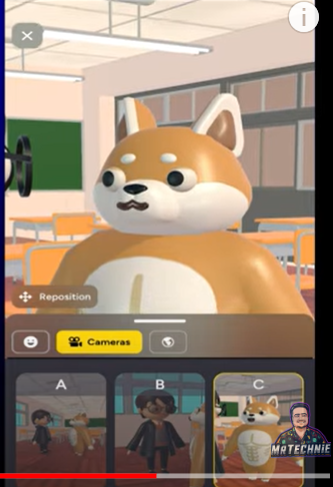
You can change the scene by clicking the cameras.
After completing the video click the Export button.


Share:

Search This Blog